1. London Eye
Design and Construction of the London Eye
The London Eye is not a Ferris wheel, despite how it may appear to be. Despite being nearly 200 times larger, its shape is considerably more similar to a bicycle wheel. The wheel has an inner and an outer rim, and a central hub and spindle that are joined by cable spokes. Its height is 135 meters (443 feet), and its circumference is 120 meters (394 feet).
The London Eye’s 32 linked capsules to the wheel are one of its most distinctive features. Given that Greater London is made up of the City of London and its 31 boroughs, these capsules reflect Greater London. It can accommodate 800 passengers, which is ten times more than the capacity of double-decker buses.
Additional Interesting London Eye Facts
The London Eye has a lot of interesting and unusual information, despite being a scarcely historic attraction. Before the Star of Nanchang surpassed it as the world’s largest Ferris wheel in 2006, it held that distinction.
Recall that the designers do not refer to it as a Ferris wheel but rather as a cantilevered observation wheel.
The London Eye receives more tourists each year than the Taj Mahal and the Great Pyramids of Giza, which is one of the most incredible facts about it. In actuality, the London Eye receives almost 4 million visitors annually who ride it. Additionally, even though there are 32 capsules, none of them have the number 13. The capsules are numbered from 1 to 33 because they wished to avoid using this unlucky number.
The London Eye contains a royal capsule, and one of those capsules was given the name Coronation Capsule in commemoration of the 60th anniversary of Queen Elizabeth II’s coronation. This is one of the most intriguing facts about the London Eye.
Depending on what’s going on in London and the rest of the United Kingdom, the London Eye frequently changes its lighting and color schemes. One noteworthy occasion was when it was lit in red, white, and blue for Prince William and Kate Middleton’s wedding.
One full circuit of the London Eye takes roughly 30 minutes when rotating at a leisurely pace. Because people may readily board the wheel when they are on the ground, the wheel rarely stops for them.
Although Julia Barfield and David Marks came up with the design for the London Eye, other architects also contributed their ideas. It was a somewhat unusual project because a huge number of architects collaborated on it, including Frank Anatole, Nic Bailey, Steve Chilton, and several more.
2. Buckingham Palace
Anyone traveling to London must visit Buckingham Palace. Perhaps you wish to visit one of Britain’s most significant cultural landmarks or you are a huge fan of the royal family. No big deal. Inside its big, opulent halls, you’ll find something you enjoy.
The history of the palace is fairly lengthy and interesting. Without one, it wouldn’t be British. Here are some amazing facts about Buckingham Palace that you might not have known, so without further ado.
The first English royal to reside at Buckingham Palace was Queen Victoria.
Although Buckingham Palace’s history dates back far further, King George IV ordered its construction in the late 1700s. In truth, the location has been inhabited since the Middle Ages, when it was a part of the Manor of Ebury. We’d never heard of it before.
Henry VIII used the location for several constructions in the 16th century, among other individuals. King George IV, however, was never even given the opportunity to call it home when the intended work was finished.
Queen Victoria moved in a few years later, in 1837, and became its first recognized resident. The palace didn’t actually become the royal residence until that point. Many kings have come and gone since then. It is still Queen Elizabeth’s house today. Your Majesty, why would you accept anything less?
The State Rooms are only open to the public in the summer
Opening Buckingham Palace to the public isn’t always practicable because it is still very much in use as a royal house. Because of this, they are only open in August and September, when Queen Elizabeth is on her summer vacation in Scotland.
Of course, that implies that you won’t see the Queen at any point during your trip.
There are many masterpieces of art around the palace, some of which you will undoubtedly recognize.
The artwork in the Royal Collection includes sculptures, paintings, tapestries, and other items. The enormous treasury is only a portion of what you will see in the palace, though. Nevertheless, the occasional Rembrandt or Rubens will still be on exhibit for all to see.
The enormous artwork of Queen Victoria’s coronation, which must be seen to be believed, is among the highlights. It’s enormous.
The palace far exceeded its budget.
The renowned architect John Nash modified the original Buckingham House into what it is today. He was unintentionally over his budget, nevertheless. You’ll probably understand why if you look at the golden accents.
He eventually lost his job on the project. The palace we all know and adore today would not exist if not for his error. Therefore, Nash ought to be given a pass. If it is possible to accomplish that.
The palace has more than 700 rooms.
Thousands of people have visited Buckingham Palace over the years. And it’s easy to see how with a staggering 775 rooms. This contains 52 bedrooms for the royal family and guests, 188 rooms for the employees, 19 staterooms, and 78 baths.
All things considered, there is definitely enough space for the Royal Family. even if there will be a lot more future royal offspring. If they do, at least we might get a few more national holidays.
3. ArcelorMittal Orbit
The ArcelorMittal Orbit, created by the artist Sir Anish Kapoor and the engineer Cecil Balmond, is one of the most spectacular and enduring visual remembrances of the London 2012 Olympic and Paralympic Games. Its remarkable looping structure has come to represent creative design and joyful ingenuity.
The ArcelorMittal Orbit, made of 35,000 bolts and enough steel to construct 265 double-decker buses, provides breathtaking 20-mile vistas of Queen Elizabeth Olympic Park and the London skyline. Steel was favored as a building element in part due to its endless capacity for recycling; 60% of the ArcelorMittal Orbit is constructed of recycled steel, including that from used vehicles and washing machines.
The ArcelorMittal Orbit, the tallest sculpture in the UK, is a landmark in its own right, transforming East London after the Olympics, and it captivates and delights tourists by providing a singular perspective of the city.
The red superstructure, the spiral staircase, the Corten steel of the canopy, the highly polished steel mirrors on the upper viewing platform – created by Sir Anish Kapoor, and Carsten Höller’s Slide winding around the artwork are the five places where steel is used in the ArcelorMittal Orbit. The ArcelorMittal Orbit was built with 35,000 bolts, and 954 steel beverage cans would need to be stacked on top of one another to reach the sculpture’s peak.
When the southern portion of Queen Elizabeth Olympic Park reopened as a gorgeous new open space for London with meadows, wetlands, and waterways on April 5, 2014, the ArcelorMittal Orbit, which had delighted 130,000 people during the Games, was also restored. The Slide, a joint creation by Sir Anish Kapoor and Carsten Höller, debuted in the summer of 2016.
Five facts about the ArcelorMittal Orbit and its slide
1. Actually, it’s one piece of art encased inside another. Anish Kapoor, a British artist born in Bombay, created the tower’s initial design, but Carsten Höller, a German artist born in Belgium, created the slide that curves around it at Kapoor’s request.
2. It’s fortunate that ArcelorMittal, the Orbit’s sponsor, is the largest steel firm in the world because the steel used to build the Orbit is equivalent to 265 London buses. (Yes, that also clarifies the name.) Oh, and since the steel is recycled, you will be standing atop old washing machines and junk vehicles when you reach the top.
3. The Orbit slide is the longest tunnel slide on the entire globe. From top to bottom, including 12 loops around the tower (known as the “bettfeder” in German), it takes 40 seconds.
4. As long as you can still slide safely, you can wear beautiful attire. You can also wear your glasses, which is ideal if you want to pull off the Clark Kent-become-Superman look.
5. Do you think the slide is audacious? To descend the Orbit, try abseiling. From early spring until late summer, you can schedule sessions to abseil down it.
4. Queen’s Gallery
View varying displays from the Royal Collection, which include works by old master painters, priceless pieces of furniture, decorative arts, and photos from a sizable collection. Some of the most notable works of Japanese art and craftsmanship in the western world can be found in the Royal Collection. In order to portray the tale of 300 years of diplomatic, artistic, and cultural interchange between the British and Japanese royal and imperial dynasties, highlights from this extraordinary collection have been gathered together for the first time.
The Royal Collection is displayed in one of two tiny public art galleries in the United Kingdom under the name Queen’s Gallery. The first gallery was inaugurated in 1962 at Buckingham Palace, the monarch’s official home in London and part of the Westminster borough. It stands where a private chapel that was destroyed in a 1940 air raid. As part of Elizabeth II’s Golden Jubilee, the second gallery of the Palace of Holyroodhouse in Edinburgh opened in 2002. The former Holyrood Free Church and Duchess of Gordon’s School served as its shell. In addition to exhibitions staged at other locations, both in Britain and overseas, each gallery hosts about three art exhibitions each year.
Since Charles II’s reign in the middle of the 17th century, the Royal Collection has largely developed. Along with several pieces of gold, silver, jewelry, furniture, and other ornamental art, it also has a remarkable collection of oil paintings, watercolors, sketches, and prints. Numerous items are on loan to various national museums, and much of it is utilized to furnish the various palaces.
The size and caliber of the collection can be determined by looking at a few of the exhibitions held in the Queen’s Gallery. Shows on specific painters including Michelangelo, Anthony Van Dyck, Hans Holbein the Younger, Canaletto, Thomas Gainsborough, and George Stubbs have been included. There have also been displays of Fabergé ornamental pieces, which total more than 400 pieces, and Sèvres porcelain.
Recently, a pair of folding screen paintings that were part of a grand diplomatic gift from Japan to Queen Victoria in 1860 were unearthed in the Royal Collection.
Extensive conservation work has uncovered fascinating information about the screens’ past, including how they were hurriedly made after a devastating fire destroyed the original versions and how Windsor Castle’s nineteenth-century repairs included pieces of Victorian railway timetables.
For the first time since their arrival at the British Court 162 years ago, the screens will be on display for the general public.
5. Windsor Castle
Windsor Castle, one of the most well-known tourist destinations in the UK, is steeped in centuries of royal history. The enormous fortress has been standing for a thousand years, and behind its high stone walls are many regal mysteries! Numerous British kings and queens have resided here over the years, and each of them has left its mark.
It should come as no surprise that Windsor Castle is full of fascinating tales, given its lengthy and turbulent past. There are many unusual, amazing, and genuinely fascinating facts about Windsor Castle, ranging from eerie legends about the haunted forest to the actual cause of the kitchen clocks’ constant slight oversleep.
One of the country’s earliest Norman defenses, Windsor Castle, dates to the time of William the Conqueror. The castle was a component of William’s defensive plan for the city of London, a ring of nine fortifications constructed in the Norman motte-and-bailey style to keep out intruders.
Windsor was an easy choice due to its advantageous location near the city and view of the River Thames. However, the present-day stone buildings, which include the Round Tower, come from the twelfth century, when Henry I, William’s grandson, built Windsor into the magnificent royal fortress it is today.
The distance from here to Windsor is more than 2.5 miles.
Ever seen a photo of Windsor Castle taken from above? If so, you will have witnessed the stunning 2.65-mile Long Walk, a road lined with trees that climbs directly to the castle. Charles II, who adored French architecture and gardens, was the original designer of this extensive promenade.
The Long Walk is surrounded by Windsor Great Park, which contains oak trees that were first planted by William the Conqueror. The Duke of Edinburgh, the designated Windsor Park Ranger, currently oversees a herd of over 40 deer in the park.
During the plague, Elizabeth I sought refuge at Windsor.
The English monarchs have utilized Windsor Castle as a haven from disease, in addition to being an invincible fortification that can fend off invaders. Queen Elizabeth relocated the royal court to Windsor and took refuge in the castle during a particularly severe plague outbreak towards the end of the 16th century. She reportedly built a gallows behind her with a sign warning that anyone entering Windsor without permission would be hanged right away in order to stop the spread of the disease.
The fact that there are so many people who live and work inside Windsor Castle is one of the most astounding facts about it. A large castle needs a lot of assistance to be kept in good functioning order.
The castle also employs a professional wine butler, knowledgeable conservationists and archivists, and even a fendersmith to maintain the more than 300 fireplaces dotted around the castle and grounds, in addition to butlers, footmen, stewards, and cooks.
6. Palm Court
The Palm Court, one of the hotel’s original attractions from when it was finished in 1927, is situated in the hotel’s center at the Sheraton Grand London Park Lane. You are surrounded by Art Deco elements thanks to the tapestries, marble floor, and exquisite ceiling decorations. The bar transports you to the affluence of late 1920s London and is entirely unique.
Experience our award-winning afternoon tea, with its delicate pastries and mouthwatering savoury delicacies inspired by the 1920s, served in this historic setting. The Palm Court is the ideal meeting spot in the center of Mayfair, open all day for a light breakfast, lunch, and dinner. With a modern touch, a 1920s-inspired afternoon tea with beautiful pastries and mouthwatering savory dishes is served.
Enjoy one of London’s best classic afternoon teas in Palm Court’s serene setting as you take in the gorgeous art deco surrounds.
The Queen’s Platinum Jubilee Afternoon Tea is being served at The Sheraton Grand London Park Lane in conjunction with Louis Pommery England. A distinct collection of British scones, pastries, and savory delicacies are offered on the menu.
The menu has a Battenberg, a Royal Apricot Mandarin Chocolate Cake, a Queen’s Hat, and Victoria Sponge, all expertly made by our pastry specialists and inspired by British tradition.
Additionally, there are freshly baked plain and golden raisin scones on the menu, both of which are served with homemade seasonal jams and clotted cream. The savory selection for the afternoon tea is designed to be a straightforward nostalgic addition to the menu and includes a variety of sandwiches with fillings such as smoked salmon, coronation chicken, free-range egg mayonnaise, and truffled cream cheese.
For the Queen’s Jubilee Afternoon Tea, the Sheraton Grand London Park Lane has also teamed up with the internationally acclaimed Newby Tea, which has developed a special “1927” blend to commemorate the year the hotel was first finished.
Afternoon tea for kids
The most famous sites in London served as the inspiration for the first ever children’s afternoon tea at Sheraton Grand London Park Lane. Bites-sized sandwiches, freshly baked scones, and your choice of hot chocolate or tea are all included in the afternoon tea. The pastries feature the London Eye, London Red Bus, and Big Ben.
The Magic Period
Make it a fantastic evening by reserving a seat at London’s most prestigious magic performance. This award-winning production, which is only available at Sheraton Grand Park Lane, will transport you to the Golden Age of Illusion. Enjoy live performances of mind-reading, sleight-of-hand, and traditional Victorian parlour tricks against the moody backdrop of the Oak Room’s wood paneling. Tickets must be reserved in advance due to the severely limited audience size. You shouldn’t miss this one-of-a-kind, unforgettable experience.
On Fridays at 8 o’clock and on a few other occasions throughout the year, performances take place. Booking is possible two to three months in advance. Browse the Pre-Theatre Menu.
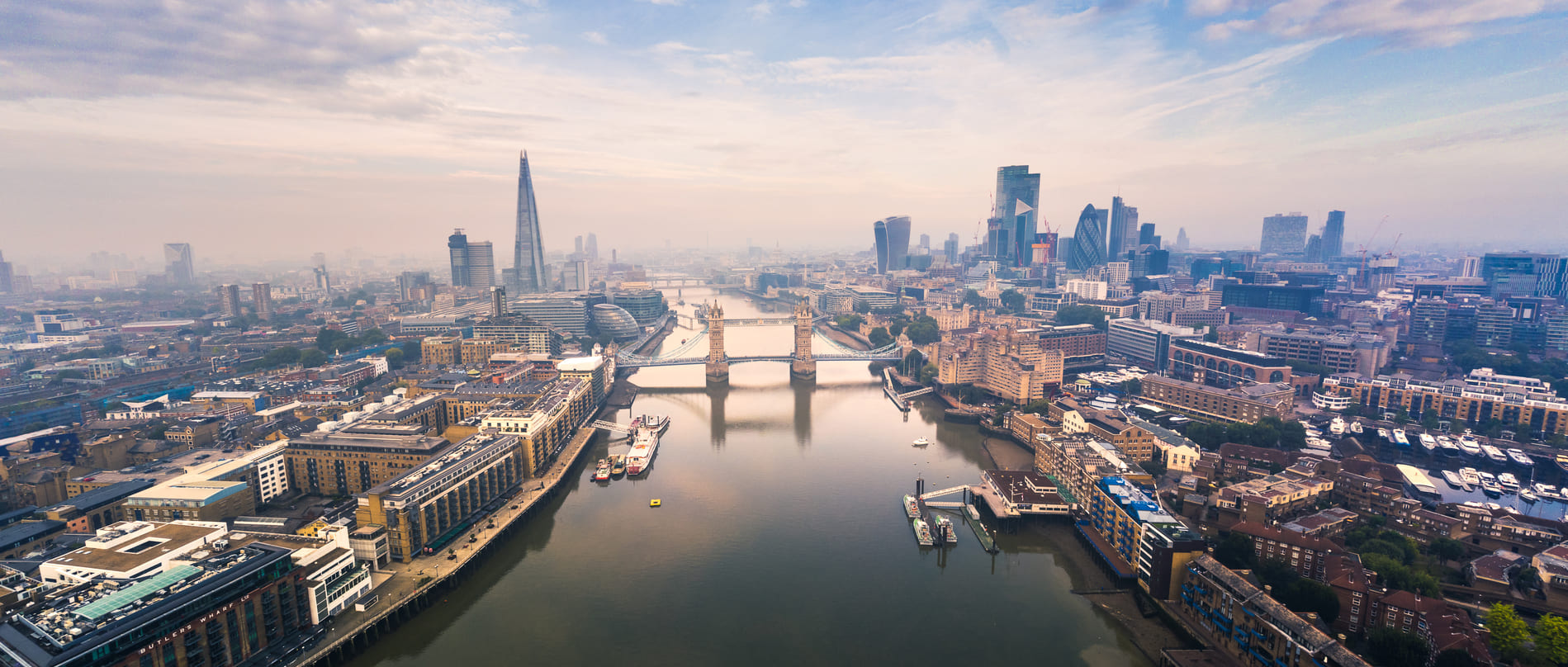
7. Tower Bridge
How much do you actually know about Tower Bridge, one of London’s most recognizable landmarks? Here are 20 interesting Tower Bridge facts you probably didn’t know.
London’s Tower Bridge may be the city’s most recognizable bridge, but London Bridge is not it. Further upriver and more plain in comparison is London Bridge. For the Bridge, more than 50 designs were submitted. In order to facilitate movement between the two banks of the Thames for Londoners, the City of London Corporation organized a design competition in 1876. No one of the more than 50 submitted designs was chosen.
Up until 1884, no one had chosen the final design created by civil engineer Sir John Wolfe Barry and architect Sir Horace Jones.
Due to its Neo-Gothic design and elevating middle parts, Tower Bridge is renowned for being London’s most eye-catching bridge. It was the most advanced bascule bridge when it first opened. For the first time since 1910, Tower Bridge was made accessible to the general public in 1982, along with a permanent exhibition named The Tower Bridge Experience.
Through interactive exhibits and movies highlighting the landmark’s position in the history of the River Thames, you can learn about the history of the Bridge and how it was constructed.
The glass walkway, the tower bridge’s biggest innovation since 1982, was introduced at the Tower Bridge Exhibition in 2014. Visitors may view Tower Bridge from a unique vantage point in the West Walkway, where they can also look down on passing boats and walkers and, if they time it just so, even see the bascules rising.
The majority of bridges are not the best places to have events, but attendees at a Tower Bridge event won’t have to worry about dodging traffic. Tower Bridge is one of London’s most well-liked venues due to the several event spaces with breathtaking views that are located within the bridge’s towers and on the walkways above.
In order to avoid an accident in 1912, Frank McClean had to fly his short biplane between the bascules and the high-level walkways.
In 1952, a double-decker bus from London was attempting to cross as the bridge began to rise. Albert Gunton, the driver, dodged disaster by speeding quickly and jumping the gap.
A gigantic set of Olympic rings were on display on Tower Bridge as part of the festivities honoring London’s hosting of the 2012 Olympic Games.
The idea that the bridge goes by the name London Bridge and that there is a song about it is a widespread one. London Bridge, which is located further down the river and is considerably more functional, is really called Tower Bridge.
8. Kensington Palace
There is a long royal history at Kensington Palace. In addition to being the official London house of the Duke and Duchess of Cambridge and the spot where Queen Victoria was born, it can also boast of having been the abode of numerous Georgian kings who all left their stamp on this magnificent Palace.
You can tour their huge state apartments, which are filled with stunning sculptures and paintings.
At the western extremity of Kensington Gardens, which stretches seamlessly from Hyde Park, London’s
largest royal park, stands Kensington Palace.
In recent years, Kensington Palace has come to be associated with the late Princess Diana. There are traces of her life all around Kensington Palace, including an official memorial, a playground, and even a local cafe that she used to frequent with her kids.
What will you see at Kensington Palace?
Once inside, you can tour the opulent chambers and areas that have appeared in numerous historical royal tragedies. View rare pieces from the Royal Collection as you go through the King’s and Queen’s State Apartments.
Mary, and successive royal consorts, resided in the Queen’s quarters. They spent their nights here, where they also ate, entertained friends and notable guests, and relaxed.
The King’s Apartments examines more formal facets of royal life where the monarch hosted ministers, courtiers, and diplomats from other countries.
Additional exhibits are available, such as “Fashion Rules,” a nostalgic look back at contemporary fashion through HM Diana, Princess of Wales, The Queen, Princess Margaret, and another book that delves deeply into Queen Victoria’s life. Diana’s magnificent green silk satin gown from her 1987 official portrait and a Yuki design of the pleated royal blue evening dress from 1986 and again in 1990 were among the additional clothes that were first put on exhibit in 2018.
After finishing your tour of Kensington Palace, go outdoors and stroll through the beautiful and well-known Kensington Palace Gardens.
opening hours for Kensington Palace
With the exception of the 24–26 of December, Kensington Palace is open seven days a week all year round.
Doors open at 10 am, close at 6 pm, and the last admittance is one hour before closure. November through February have a 4 p.m. closing hour during the winter.
nearest subway station
The main entrance to Kensington Gardens is direct across from Queensway Underground Station (Central Line). To get to the palace properly, you must first walk past the Princess Diana Children’s Playground for 5–10 minutes.
boarding and alighting buses
On the south side of Kensington Gardens, Kensington Palace is serviced by every hop-on, hop-off sightseeing bus in London. In close proximity to Queensway Underground Station, Big Bus also has a stop on the Bayswater side of Kensington Gardens.
9. National Gallery
With our guided tour of the National Gallery, you may spend the day appreciating more than 700 years’ worth of well-known European artwork. The Gallery, which is accessible all year round and is situated in Trafalgar Square, has an amazing collection of 2,600 works by artists like Vincent van Gogh, Leonardo da Vinci, Rembrandt, and Claude Monet. You will examine the background and tales of the collections, masterpiece by masterpiece, with the help of our Gallery-approved Blue Badge Guides. One of his most well-known paintings, Van Gogh’s “Sunflowers,” is among the best. You may not be aware, but there are five different renditions of this picture, and they are all housed in various museums all over the world.
The Supper at Emmaus by Caravaggio, which shows the moment Jesus’ followers realize they are in the company of the resurrected Christ, is also housed in the Gallery. The Virgin of the Rocks by Leonardo da Vinci and Bathers at Asnières by George Seurat are two further masterpieces.
Our expert-led tour, available during the day and throughout the year, lasts around an hour and includes time for you to explore the collection at your own pace after the tour.
Discover the history of European art at the National Gallery, masterpiece after masterpiece, using its collection of inspired works by Botticelli, Leonardo da Vinci, Rembrandt, Gainsborough, Turner, Renoir, and Van Gogh, among others, that is open to the public. Free family activities are offered for kids of all ages, as well as guided tours and multilingual audio guides.
You can attend some amazing exhibitions this season. View the vivid and colorful works of the Impressionist movement in “Courtauld Impressionists: From Manet to Cézanne” or learn how “Mantegna and Bellini” influenced the Renaissance.
For a weekend of poetry, printing, and expert drawing workshops, you may also join the Winter Survival festival if you’re searching for adventure.
The National Gallery will also host the first exhibition of Spanish Impressionist Joaqun Sorolla in the UK in more than a century (18 March 2019), which will honor the vibrant seascapes and lively scenes of Spanish life.
10. London Zoo
Visit our Animal Adventure play area, get up close to the penguins, and enter the Dear Zoo universe. This spring at London Zoo, there is a tonne lot see and do. We’ve compiled a few seasonally appropriate family favourites. Additionally, a ZSL membership entitles you to unrestricted free admission all year long to the London and Whipsnade Zoos.
Visit our penguins on the beach.
Our colony of Humboldt penguins lives on the beaches of South America. It is the largest penguin pool in England, holding 1200 square metres and 450,000 litres of water. Visit during feeding time to observe the penguins diving for food. From our designated viewing spots, you can see all the underwater action. Our daily Penguin Talks at 1:30 pm are a great way to learn more about our penguins and their personalities.
Discover the truth during our daily animal chats.
The Komodo dragon is a feared predator, but why? A giraffe can sprint how quickly? What is so unique about Galápagos tortoises? Join the daily discussions to discover everything there is to know about the personalities of your favourite animals. Ask our specialists your most pressing questions and read the most recent animal news.
Adventure with Animals
Your little explorers will have the best time learning about the creatures of the Zoo while having fun in our Animal Adventure play area. To keep kids entertained, the playpark has slides, a climbing wall, and other features. Alpacas, pigs, and porcupines can all be safely approached by young explorers. Our knowledgeable keepers will be available to answer queries and provide inside information on the lives of the animals. You can stop by Peckish Parrot, our catering kiosk, for a pit stop to refuel with hot beverages and a variety of food. Remember that Gold members receive 10% off at all of our stores and restaurants.
Observe Dear Zoo
Enjoy the zoo’s adaptation of the beloved children’s book Dear Zoo. This Easter, we’re throwing a Dear Zoo experience that is jam-packed with fun to commemorate the 40th anniversary of Rod Campbell’s children’s book. In the Dear Zoo hub, kids can engage in interactive games and storytelling sessions. Your young explorers can participate in activities along the Dear Zoo trail as you encounter actual creatures from the book. Every child can obtain a special Dear Zoo anniversary sticker once they have gathered all the stamps located at each trail point. Enter Rod Campbell’s most recent book, Look After Us, next. With the help of interactive activities and storytelling sessions, kids may learn how to care for animals in distress.